


Why Does Discourse Have So Little Competition?
Not too long ago I was tasked with researching for a potential alternative to our community forum software provider Discourse in anticipation for the launch of our new complex no-code work management platform Skippet. What I had anticipated was an array of software to choose from, where I would be able to put together a comparison and pick a software that perfectly fits our needs and desires. After-all, the software market is becoming saturated in almost every vertical right? In the space of community software’s, actually no. Its not saturated at all. There is very little if not any competition to Discourse. Immediately you can understand why. Discourse has plentiful features and from an admin perspective it is very easy to manage posts, replies, and notifications. Its why almost every product led growth (PLG) company has adopted the Discourse platform to run their community on. But during my research, what exactly did I discover?
Competition is generally sparse. But the most interesting competitor that I came across was called Tribe. Tribe is compelling because it has taken a different product design language to Discourse. With Discourse being synonymous with a ‘traditional’ forum layout. Tribe has is designed around a ‘live feed’ design. A design that we are more akin to from a social media platform.
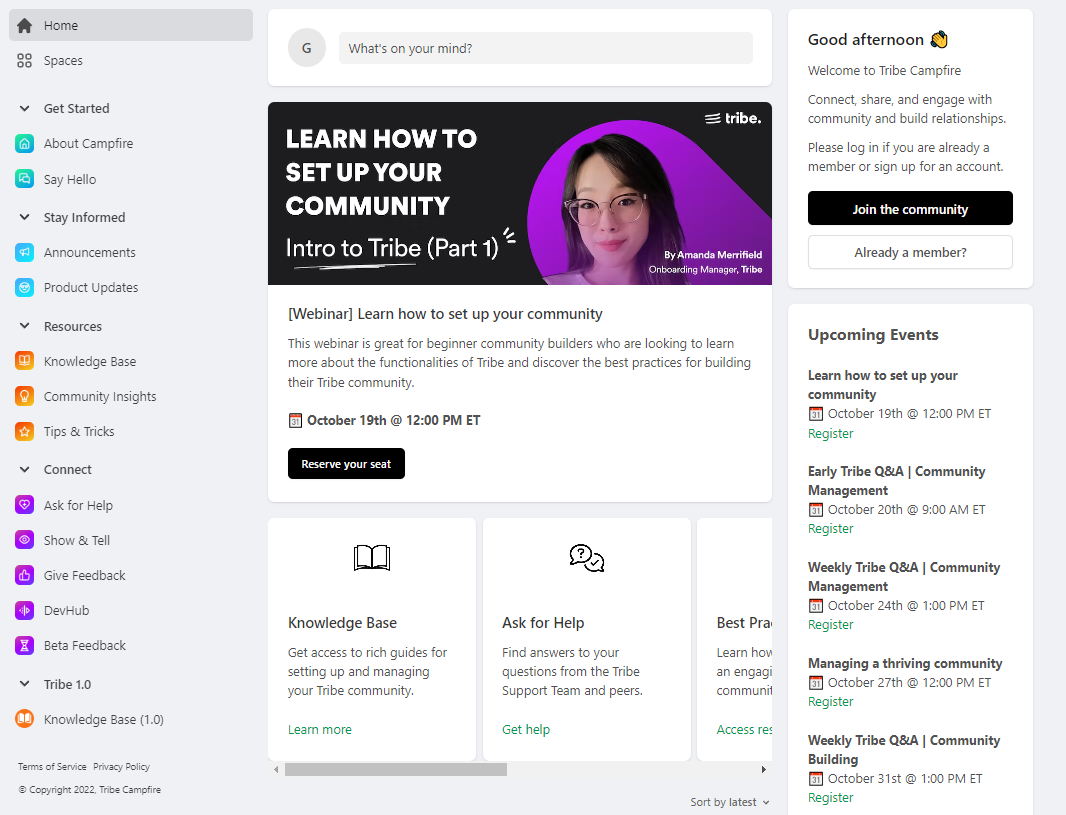
This does come with its benefits. According to user reviews, Tribe customers applaud their customer support, ease of use, feature-set, and an easy set up process. Tribe’s stand out feature are apparent when demoing their platform. There is a heavy focus on social interaction. In a single page you can display and navigate users towards various information channels. There is no need to direct you customers through numerous web-page views. All on the homepage users can find your resources, announcement, feedback submission page, and even connecting for help. There is even a permanent spot for you to advertise your events and webinars with space for registration links. It all looks rather tasty; however, Tribe’s glaring problem is its design language. A live feed system is simply becoming outdated! I am not the only one who thinks like this. Looking at the statistics, we can see a clear stagnation from the platform that bears the closest resemblance to Tribe, Facebook.

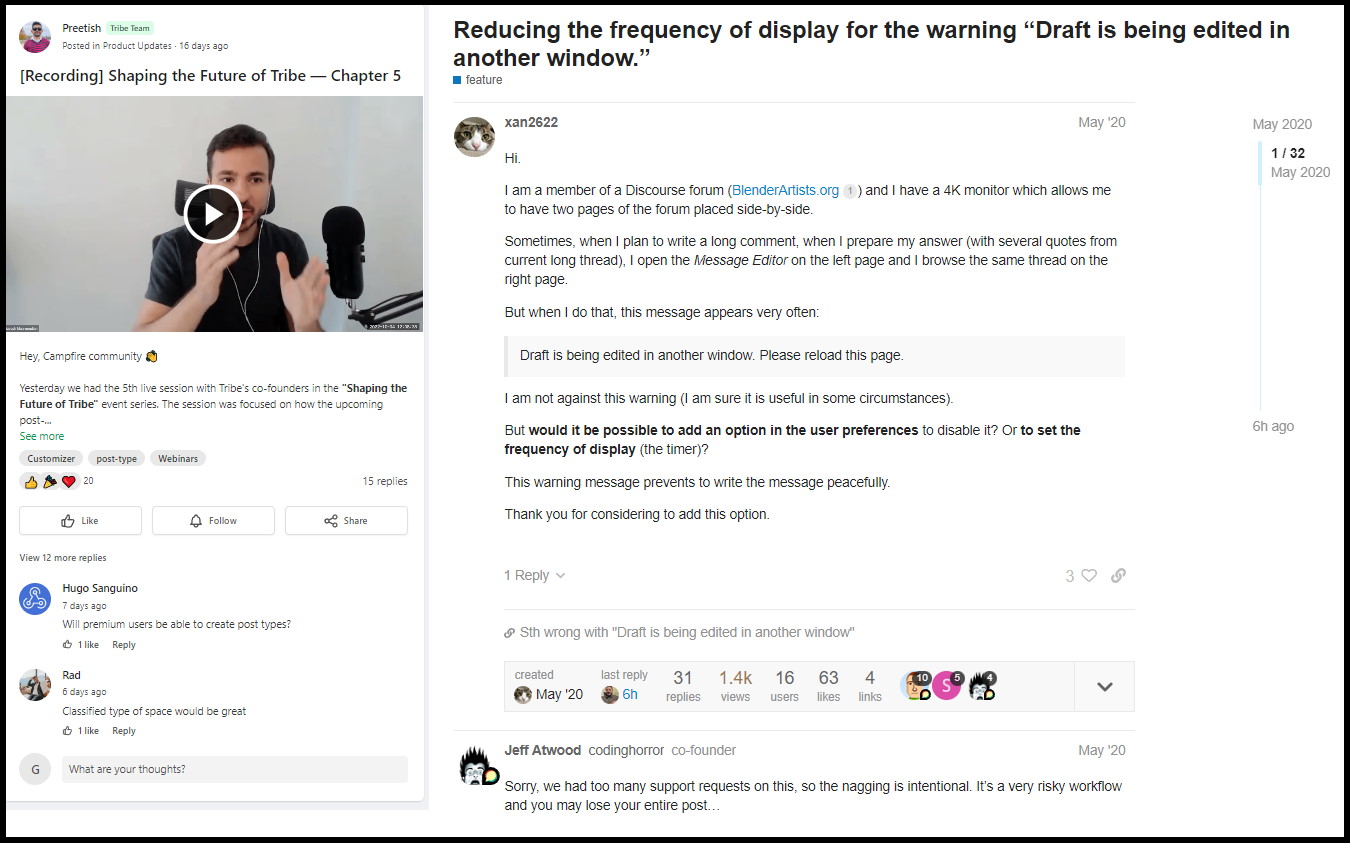
Like with Facebook. On a Tribe platform users can make posts, like those posts, follow, share, and comment. Each post features a user profile picture, name, team, and a tag. It feels like a social space rather than an information forum that you feel a Discourse community facilitates better. That is where the secondary problem lies. Companies who are embracing a PLG model will identify that a community is key to having a successful PLG model. Decision-makers will want their community to become a user’s main source of information and eventually become the primary platform for interaction. This will eventually lessen the reliance on customer service, as users can now search for their problem in a forum, or create a new post which later another user will be able to benefit from the available knowledge. With a good search bar, you will quickly eliminate FAQ’s being sent directly to your support team. In my humble opinion, Tribe’s platform (from a user’s perspective) is just not as good in becoming an information hub.
In a Discourse forum it is very easy for a user search and find threads that are related to your problem. Often if it is a simple question, you can get your answer immediately, eliminating the need to contact support. Threads are very readable and its always clear as to who (employee of the company) is responding, and you also have useful stats on the thread to inform you if the thread was active.
Let me preface to say that Tribe is not all that bad. It does feature a cheaper entry point then Discourse. There are plenty of templates to use. It is possible to integrate various apps into your Tribe (Intercomm, Hotjar, Amplitude, etc.). And on the Tribe website, you can easily find a link to an example community so it is easy to get a flavour of Tribe. Tribe is best suited for companies who perhaps are not as focused on a PLG model and instead want to create a community that is focused on announcements, and general customer outreach. Rather than expecting users to frequently interact with their questions and suggestions.
Another competitor I identified was Higher Logic. Which I have a problem the minute I enter their website. There is no way for me to see an example community. Yes, you get a few snazzy points about how Higher Logic functions but to receive more information. A potential customer must contact their sales agent. This in its own is a considerable minus, particularly for smaller companies and start-ups who are agile, will do their own research and want to get started with no barriers.
A beacon of light emerged from Google. Who have created their own community platform called Google Cloud Community. It is a community platform that has been designed to standardises the community design across all their software. So, no matter what Google product you are using, their community forum pages all feel and look the same. Their community design features a big search bar. Space for announcements or latest blog posts, and below space for discussions on the relevant product. It is very well laid out and easy to understand.
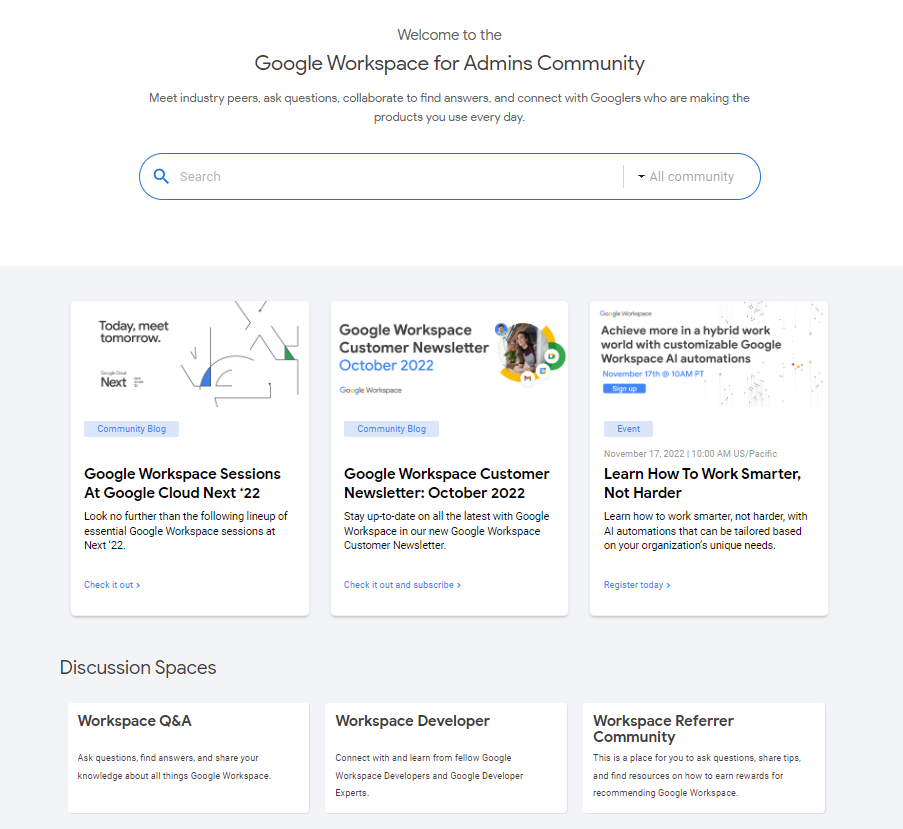
Unfortunately, Google has not made this layout available as an individual product! Which I think is a massive shame. Google has created a fantastic platform for managing a community that is particularly focused around PLG – a model that you could argue roots from Google’s products and services.
That disappointment circles us back to my original argument. For any PLG company who is considering starting a community forum to facilitate information and interaction with their users. Do not really have much of a choice other than to choose Discourse! Tribe would benefit companies that host events and are more social or locally oriented. But Discourse has far more customisability, a more traditional layout, that naturally makes it easier for users to navigate and by default, threads encourage a Q&A forum style discussion. With companies opting more and more for a PLG model, there does appear to be space in the market for a competitor to penetrate. The benefit? More competition will be provided to Discourse. Creating more innovative features and products in this space and for potentially a lower cost. Enabling Customer Success Managers
to better and more innovatively communicate with their use base.